
Notes From My First Botanical Watercolour Workshop
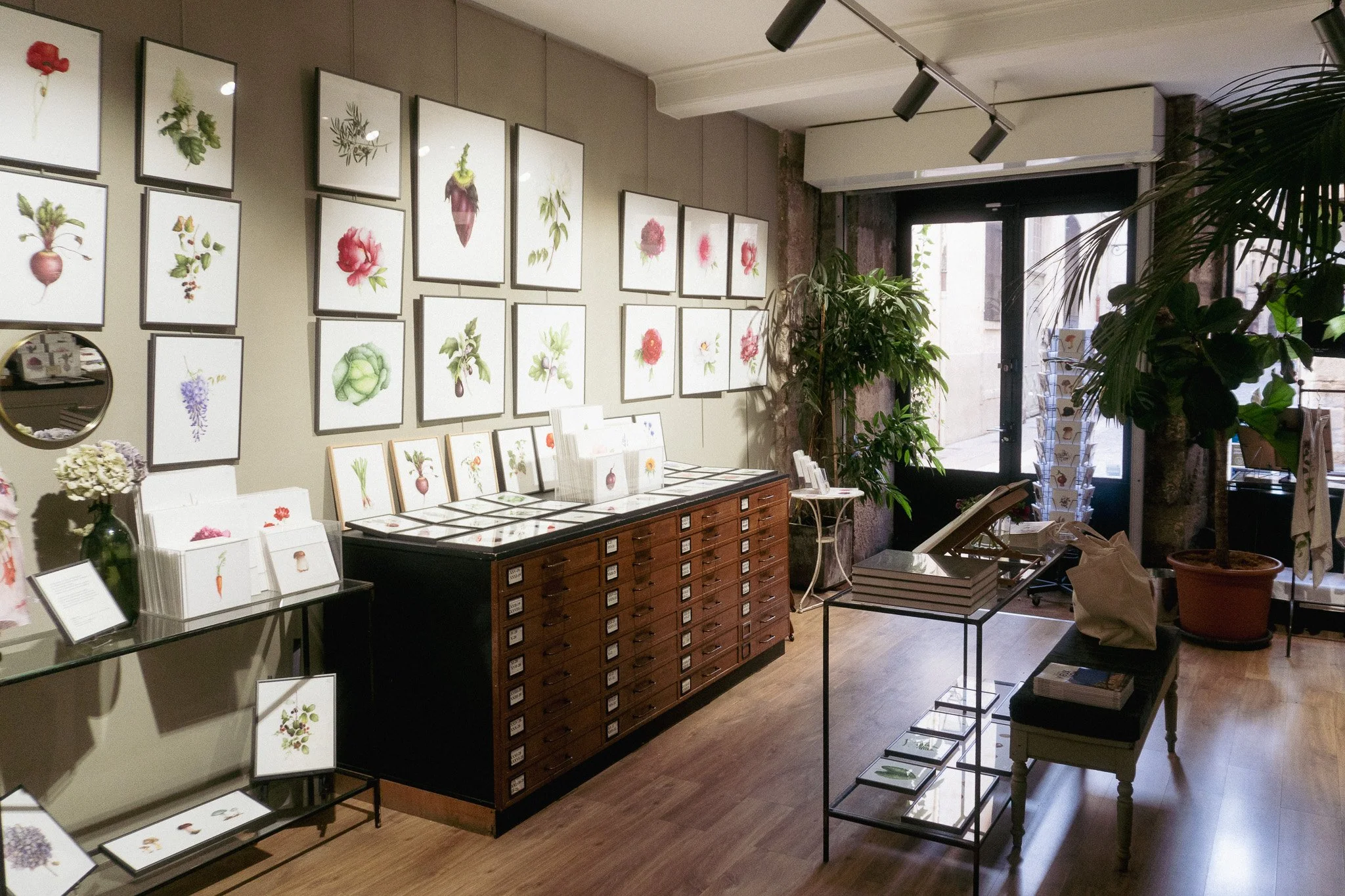
Vincent Jeannerot’s atelier & gallery in the Old Lyon
One of my goals for 2025 was transitioning from focusing almost exclusively on my studies to creating more personal art. For that, I planned on attending one workshop related to my interests… 2025 ended up so full of unexpected opportunities that I wasn’t able to fit it in, but I got around to it this year.
In February, I finally took a two days watercolour botanical workshop at Vincent Jeannerot’s atelier, and the experience exceeded my expectations.
A Classical Watercolour Workshop
Botanical painting is one of the interests I have wanted to explore for a long time, but I had a lot of questions holding me back. I was probably overthinking, but this is exactly the kind of situations where a workshop can be extremely helpful. I love online education, but there are a lot of things you can only get in person.
A Beautiful Setting
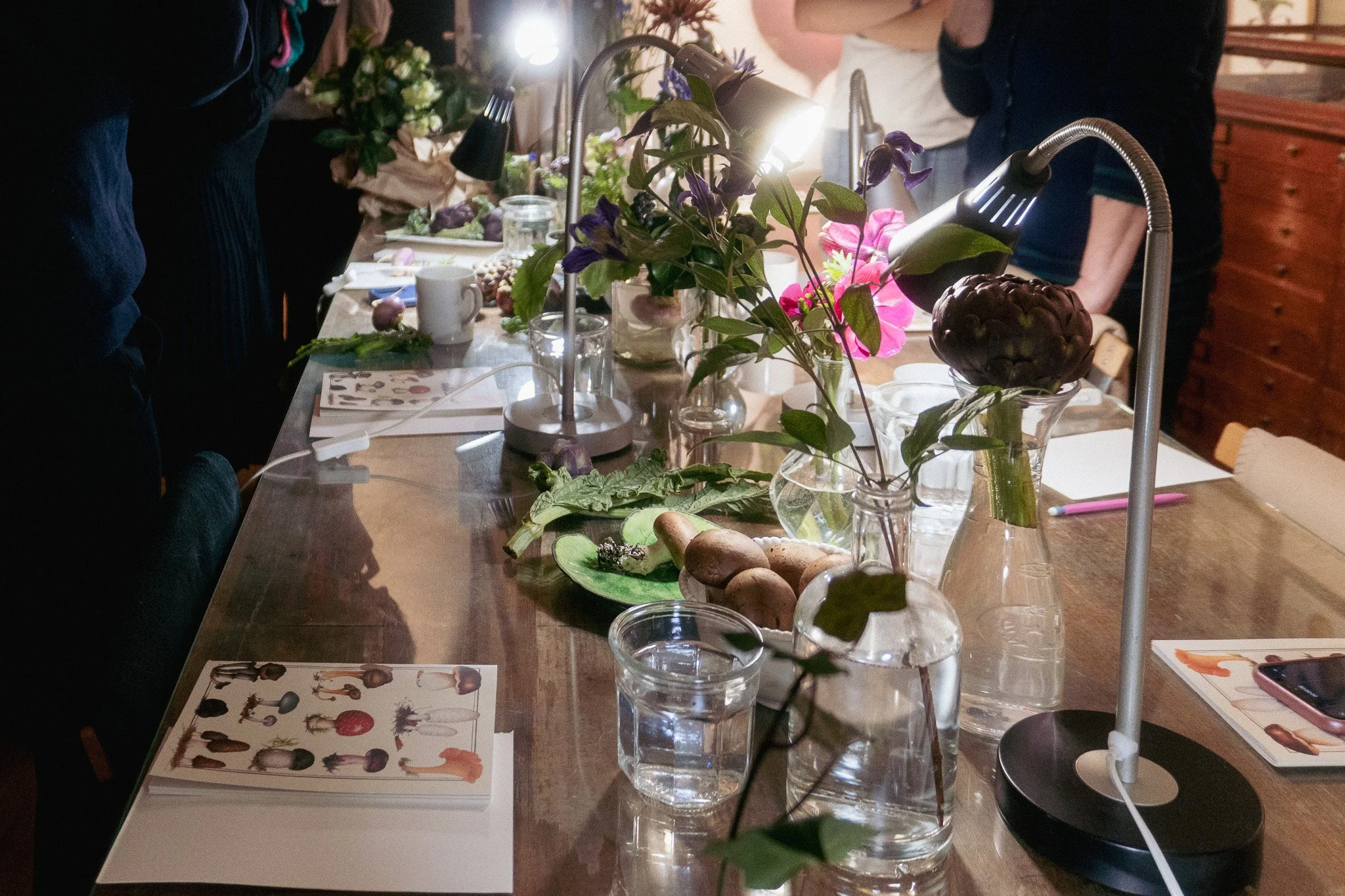
Workspaces and subjects ready for the first day of the workshop
One of them is the inspiration that comes from being immersed for two days in a beautiful atelier, surrounded with painting and plants. And this is a beautiful one! Vincent Jeannerot’s atelier and gallery is situated in the Old Lyon, an historical neighbourhood from the Renaissance. Inside, walls are covered by his botanical paintings, and a selection of beautifully crafted products fill the shelves, from high quality art prints to printed pouches, and fine silk scarves featuring his painted flowers and made here in Lyon (a historical silk weaving city).
This isn’t just a detail. I have designed and created products for years for my brand, and I know how easy it is to get things cheaply printed and made, but also the difference high quality craftsmanship makes. One of the things that struck me with Vincent during this workshop is his respect for craft and unwillingness to compromise on quality.
The back of the shop is where we found a beautifully dressed table with painting stations already installed, as well as an inspiring selection of seasonal flowers, vegetables and mushrooms. This is a sight that makes you want to sit and start drawing right away.
The Workshop
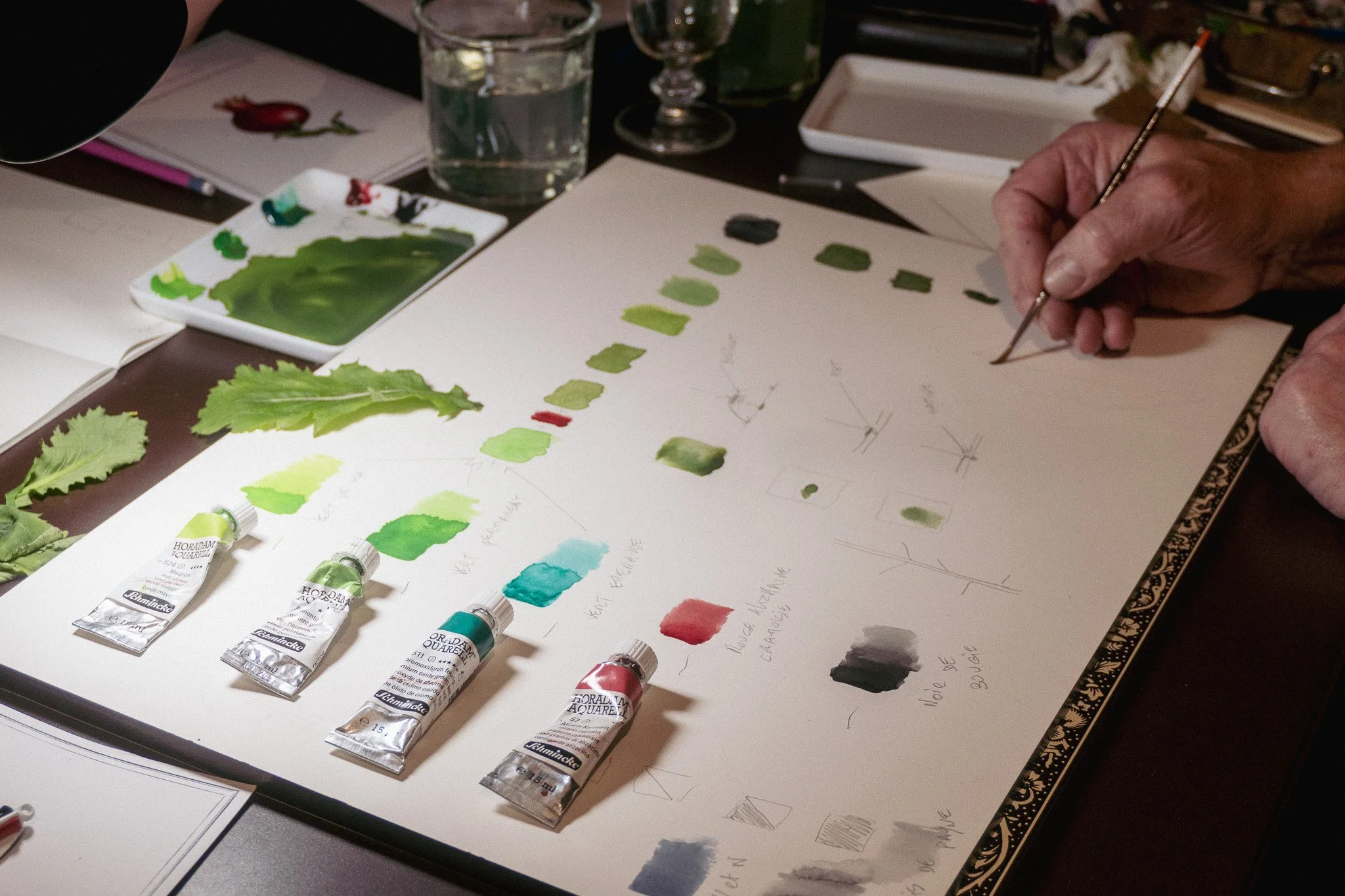
Water control and color mixing demonstration
The workshop was two full days of instruction and painting, Saturday and Sunday. We were very well taken care off all along, with traditional French hospitality. They booked restaurants for the group for both lunches, which was a really nice touch and allowed me to discover excellent ones in this touristic area.
The materials list surprised me a little when I received it: it was very short, specific, and high quality. Having learned art online, where students can be from all over the planet and have access to different brands, I am used to longer and looser materials list that avoid emphasising specific brands as much as possible. This one came with exact references, which simplified shopping a lot. There was also the option of borrowing materials at the atelier, but I went ahead and purchased the paints I didn’t already have. Because the list was only mentioning the highest quality brands, I assumed that it was so limited (just one brush) as a compromise to not make it too expensive. But that wasn’t the case: the materials we were presented with are exactly what Vincent works with, which I really appreciate.
To me, this is a mark of respect towards the student to let them know what exact materials you are using, rather than leading them to expect similar results with lower quality materials. Not every teacher does that, and not every teacher is completely transparent with their process. During the workshop, Vincent did multiple demonstrations, answered all questions directly, and showed us multiple unfinished or in progress works to illustrate his process.
A Classical Watercolour Technique
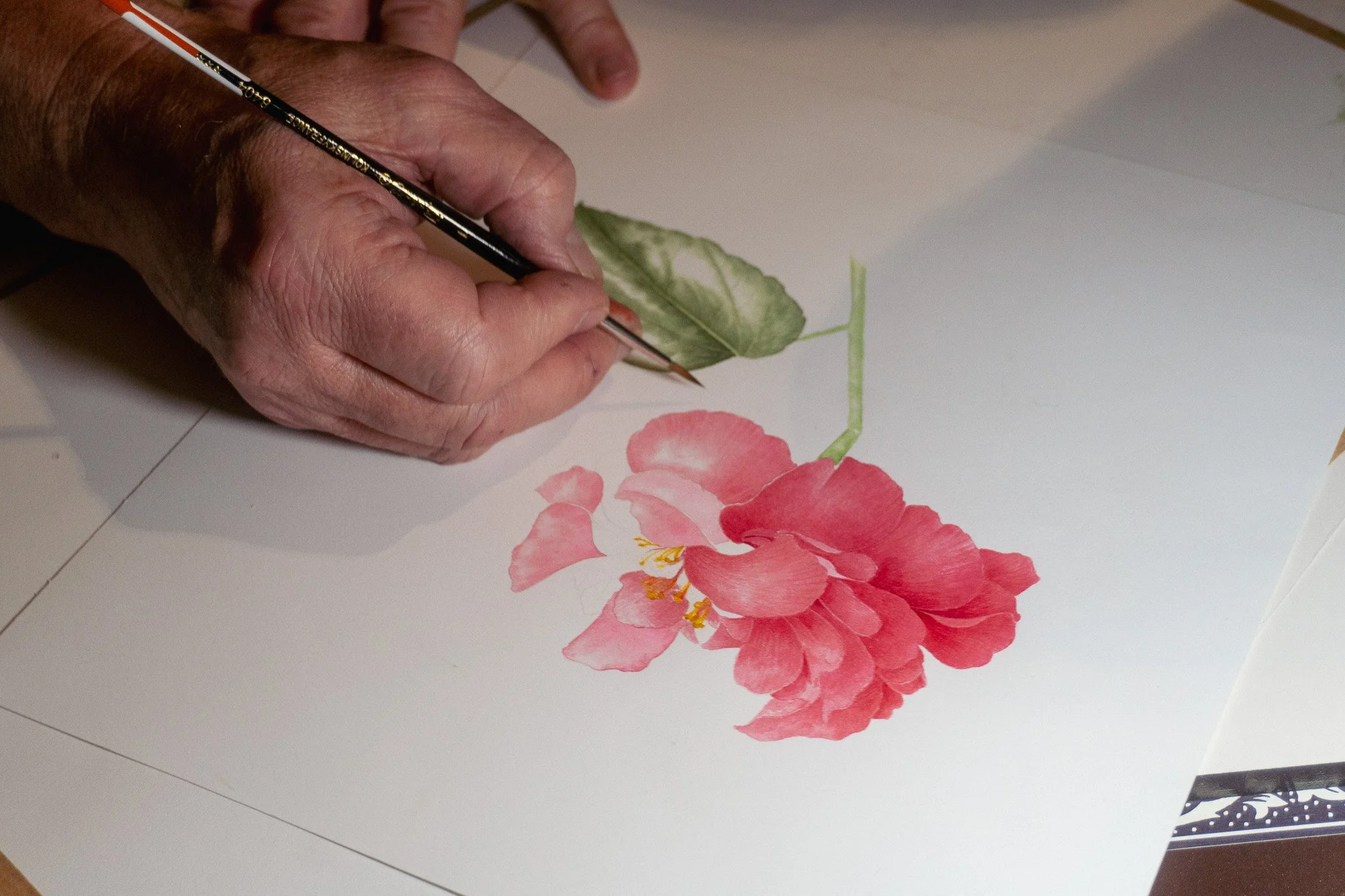
Vincent commenting one of his unfinished watercolours
Vincent’s method is both clear and very straightforward. It answered a lot of questions I had about botanical illustration, from where to find subjects (anywhere, don’t overthink it) to how to keep it in place while drawing (just hold it in your other hand), and many more I hadn’t thought about. The two days were packed with information about botanical illustration rules and principles, understanding paper, paint, how to mix different colours and apply paint on paper.
He called his technique classical. It is a more traditional way of using watercolour where fine control is preferred over letting the medium express itself as tends to be the main trend today. I always enjoy seeing different ways of using a medium, not to say one is right and the other wrong, but producing different effects and serving different purposes.
This was my first time being able to learn from someone using watercolour in this way, seeking control, a very gradual rendering, and expressing the texture and colour layers of the plant through layers of paint. Botanical watercolour painting is highly descriptive, and all about the subject, so this technique makes a lot of sense.
It is a slow, gradual process with many passages of thin hatch marks to obtain a full value painting from very diluted paints. This makes this technique more forgiving, but also rewarding: how good your results only depends on your patience, observation, and dedication.
Learning Online
I know that most of you reading this aren’t in France or able to come take this workshop in person. This was an important aspect for me and I feel very fortunate to be so close to Vincent’s atelier, but if you are curious about his technique and teaching, he has recorded video courses on his website and with Domestika.
My Takeaways
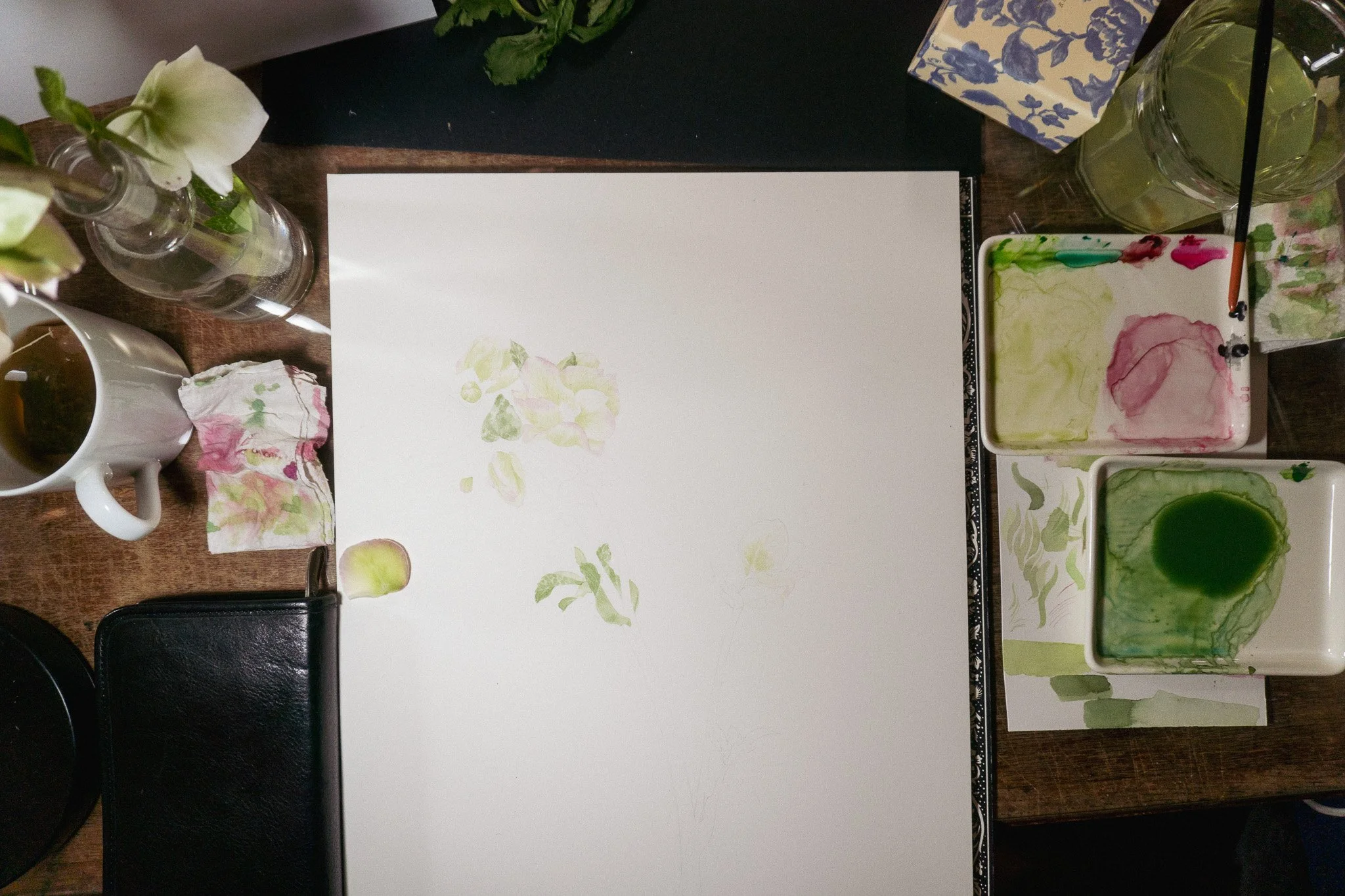
A view of my painting space during the workshop
After three in person workshops last year, I learned to not focus too much on my own results during these events. My goal is to learn as much as possible, be ready to embrace a different process and make mistakes, and I know there will be more to unpack after the workshop. I took a lot of notes that I still have to clean up in my art journal.
For my subject, I chose a beautiful hellebores, which is my only regret: if I could go back, I would pick a much simpler subject to be able to get it closer to a finish within those two days. I didn’t go very far with my flower, and I will leave it where it is. It has given me a lot of learning opportunities, but I’m not fully satisfied with the drawing itself and want to apply the technique to another subject.
This doesn’t take anything away from the experience: I had a wonderful couple days with an amazing group, learned more than I was expecting, and left inspired and excited to paint more.
My takeaways from this workshop are of two sorts: the technique, and something more philosophical that I needed to realise. The technique is in my notes, in my memory, and I have to keep practicing it to deepen my understanding… For the more philosophical side, the most important thing I took away from this workshop is a greater sense of freedom about painting what I want, how I want to, and following my own artistic sensitivity.
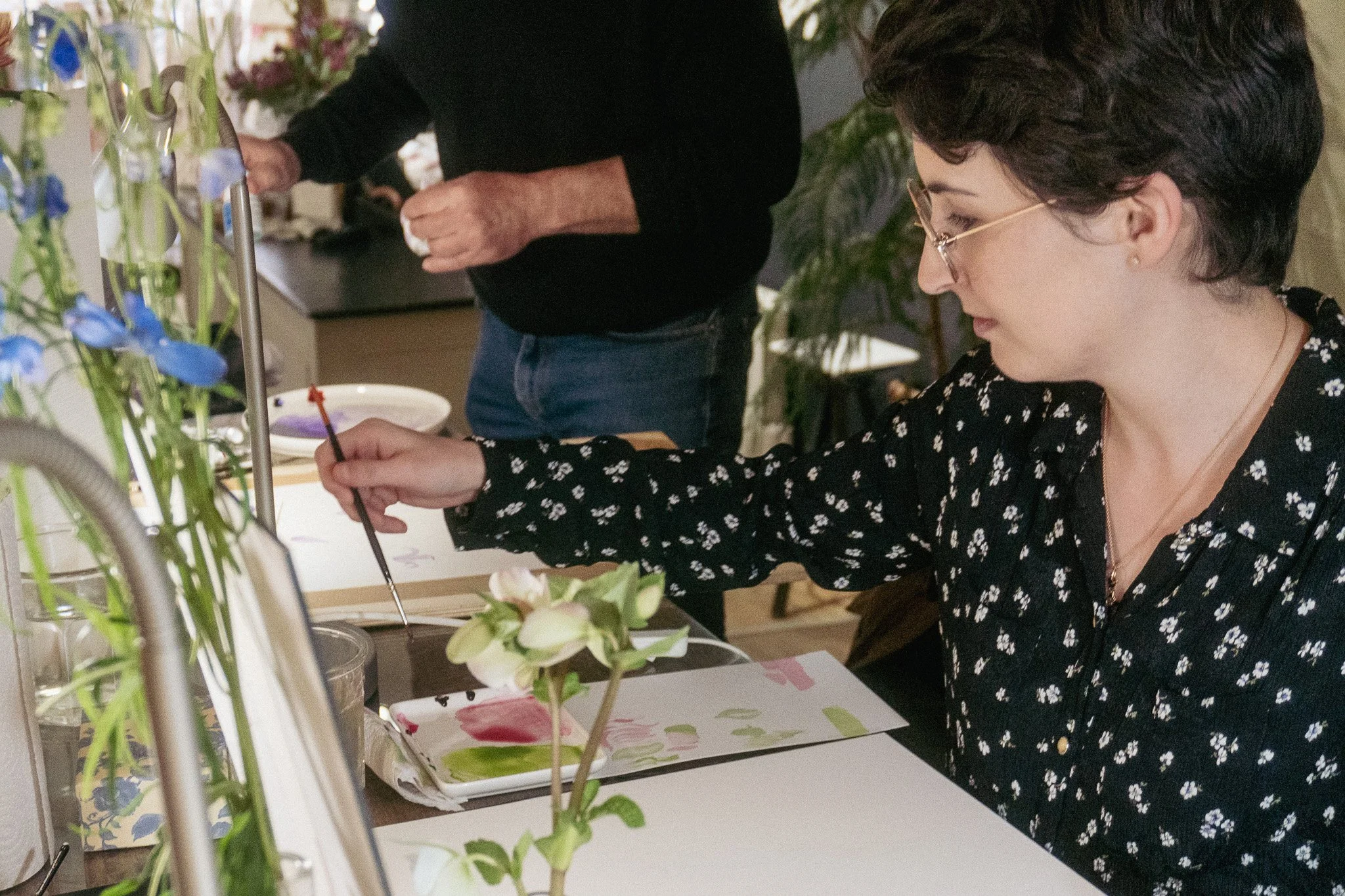
Thanks to Lauren for this photo
