
Rebuilding Your Art Practice After a Rupture
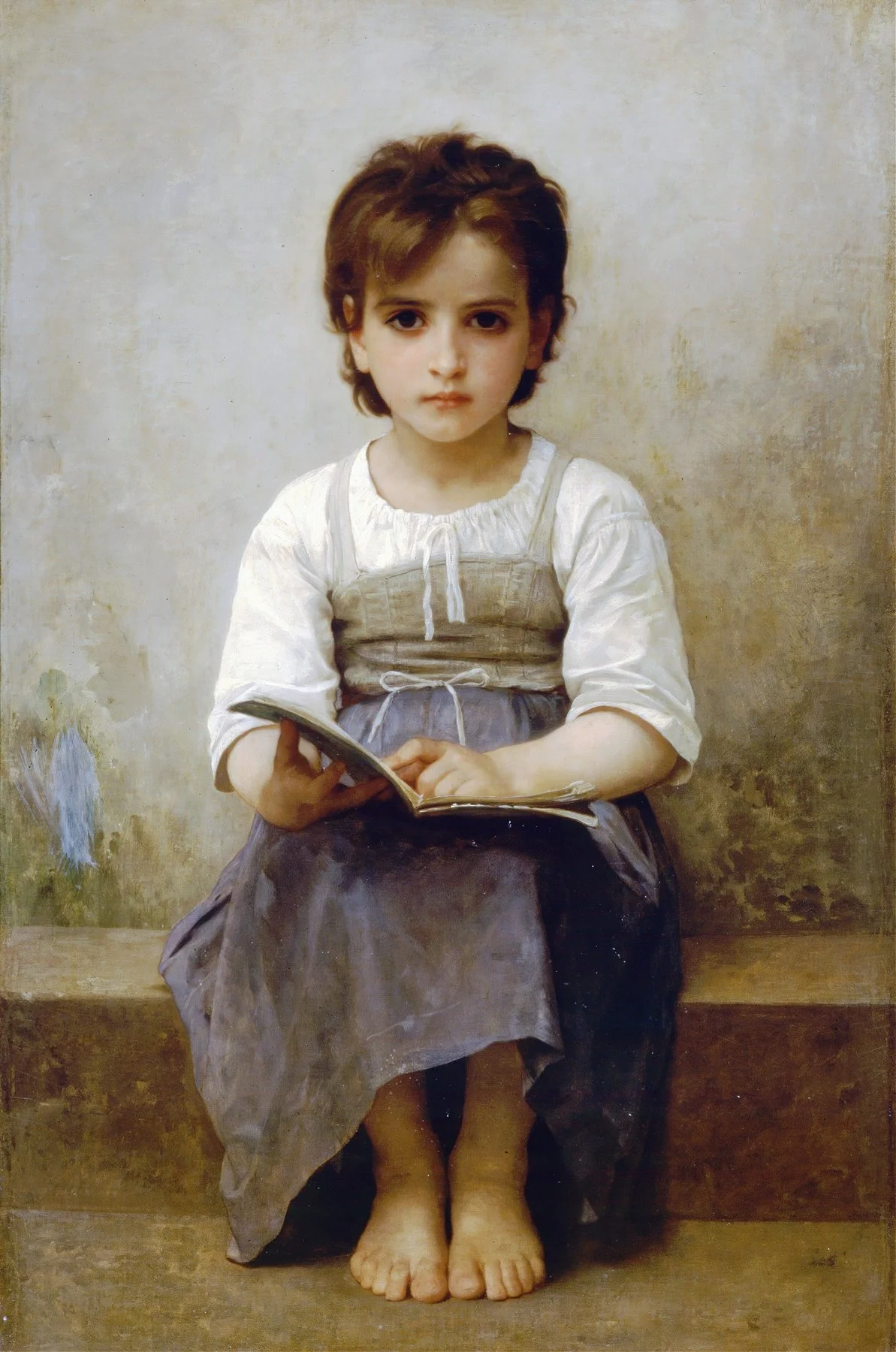
The hard lesson (1884), William Bouguereau
For the past couple months now, I have taken a break from art. This was much needed for me, but rest is a tricky thing: while you need some, too much of it isn’t good. Since getting back to art seriously in 2023, I lost momentum and had to rebuild my practice more than once. It is always uncomfortable, but gets easier: the more I go through this process, the more I trust that things will feel better eventually.
Knowing when to give yourself permission to pause, and when to push yourself is extremely difficult when working on your own, but something every creative has to face at some point. Waiting for motivation to come back rarely works. There will always be an effort component to art making, a little push necessary before the joy of creating can flow back.
In this post, I’ll share my approach to rebuilding my art practice after losing momentum, whether it is due to life circumstances, artistic burnout, or an existential change.
Find Out What Made You Drift
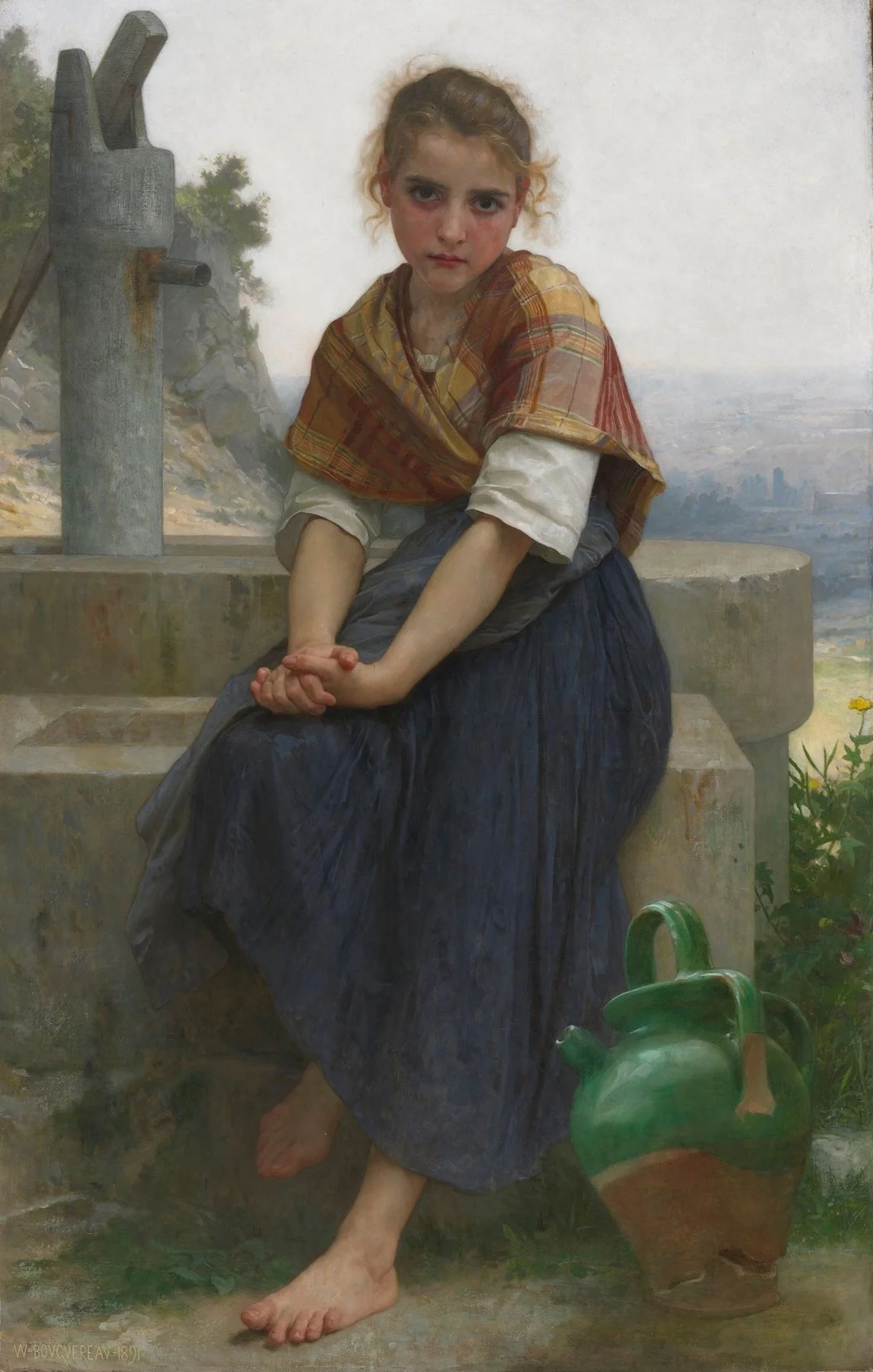
The Broken Pitcher (1891), William Bouguereau
You don’t fix something by doing more of what broke it in the first place. Understanding what went wrong is essential to not only get back on track, but avoid following the same path in the future. While getting distracted, overwhelmed, exhausted or losing sight of your purpose for making art all result in losing momentum, recovery can look different.
Talking about it to other artists, a mentor or simply a friend can be extremely helpful, but we can also learn to become our own support. It starts by treating ourselves with the compassion we often keep for others.
From Expectations to Curiosity
When going through this process of helping yourself rebuilding your practice, it can be helpful to consider yourself as another person. This is a way to get more distance, and try to treat ourselves with more compassion. Imagine that you are trying to help another artist, someone you care about deeply.
When we want to do something but can’t get to it, it is easy for our thoughts to take the shape of orders, self-deprecation, shame, lamentation, or guilt. This is because we have high expectations for ourselves, and don’t make the effort of trying to understand what is going on as much as we might for someone else. Expectations can be a powerful motivator, but when those aren’t working anymore, you need to shift towards a different approach.
Try to see the problem with curiosity: instead of thinking about how you want to be feeling and what you should be doing, try to understand why you are in this situation. Get some distance, drop all previous expectations, and try to understand what is happening without prejudice. Curiosity implies being open to an unexpected answer, and ready to hear the truth. Don’t assume that you already know, try to dive deeper than the first answers that come to you, and understand what is really going on underneath.
Some useful questions to ask yourself include:
When was the last time that you felt good creating?
How did your art practice feel then, and how does it feel now?
What was different then?
Did something specific happen since?
Why are you even feeling bad right now about not making art?
What is making creating especially hard right now?
What would make it easier?
You could find that:
Something in your personal life is affecting your creativity,
You’re not feeling well or meeting your basic needs,
Something happened in your artistic life that changes things,
What used to motivate you in the past has become irrelevant,
You lost motivation, inspiration, or meaning,
Or something entirely different.
Depending on what you find out at this stage, the rest of this post might be more or less relevant to you. But whether or not you find more insights below, simply shifting from expectations to curiosity can be extremely helpful.
When approaching a problem with expectations, you are focused on the outcome, what you want to be getting, how you want things to be. But curiosity allows you to reevaluate your methods, and even see if something is wrong with your premises. While pushing yourself blindly can be effective at times, like self-discipline, it has its limits. When it isn’t working anymore is a good time to focus on understanding instead, and be ready to adjust your approach.
Understand What You Lost
Seated Nude (1884), William Bouguereau
If art and creating used to be natural or easier than it is now, it might be because you lost something that used to be there. A lot of people might say they lost motivation or inspiration without thinking twice about it, but the distinction matters. Losing motivation, inspiration, or meaning can all result in a rupture in your art practice, but they feel different, and take a different approach to be found again.
Meaning is your very purpose for making art. It is existential. It doesn’t necessarily influence your motivation or even your inspiration, and goes beyond specific mediums, skills, or genres. It might be something you can’t express with words, or relate to the divine if you’re spiritual.
Motivation is your drive to make art or create. It is more concrete than your meaning, but can be related to it. It is something you can put into words, or feel like an urge or an inner fire. Motivation can be internal (a goal you have chosen for yourself), or external (related to external pressures or validation). Its intensity fluctuates, and it is influenced by your environment, mood, and lifestyle.
Inspiration is the direction your creativity is taking. It has to do with influences, medium, genres, topics, ideas or feelings you have… Inspiration is inherently internal, you either feel it, or you don’t.
Another way to think about it is that meaning is your engine, motivation is your fuel, and inspiration is the direction in which you’re travelling.
You can have inspiration without motivation: an idea you want to pursue or develop, without feeling a strong drive or push to do so. You could also have motivation without inspiration: a strong desire to create, but no object to direct it towards. Meaning is different: it lives deeper than motivation or inspiration, and is necessary to create any kind of art. It isn’t something you can truly lose or destroy, but you can lose touch with it.
Losing touch with your meaning can feel like being lost. If you have ideas, they feel empty. You might feel a sense of detachment from your identity as an artist, and not know what the point of creating is anymore. You would have the energy and sense of direction to move towards your goals, if only there was a goal worth moving towards.
Losing motivation is a lack of desire or energy. You have a meaning, you may even have inspiring ideas: you know where you want to go and why, but can’t gather the energy to get in motion.
Losing inspiration is a lack of specific interest or direction. Your meaning is still there, you may feel energised and even excited to create, but you don’t know what. There is nowhere to direct this energy.
When you find yourself unable to create, understanding if you’re missing motivation, inspiration, or a stronger connexion with your meaning is important to address it the right way.
The most common approach is to wait for it to come back. There is truth in the fact that inspiration and motivation can’t be forced, but you can create favorable conditions for them to appear. Waiting for your creativity to come back has the advantage of make you drop expectations, enjoy different aspect of life, and get new experiences, all of which can be extremely valuable.
But this isn’t always enough. And once you are rested, refreshed, and understand what is going on with your art practice better, you can take a more active approach to rebuild it.
Make a Plan
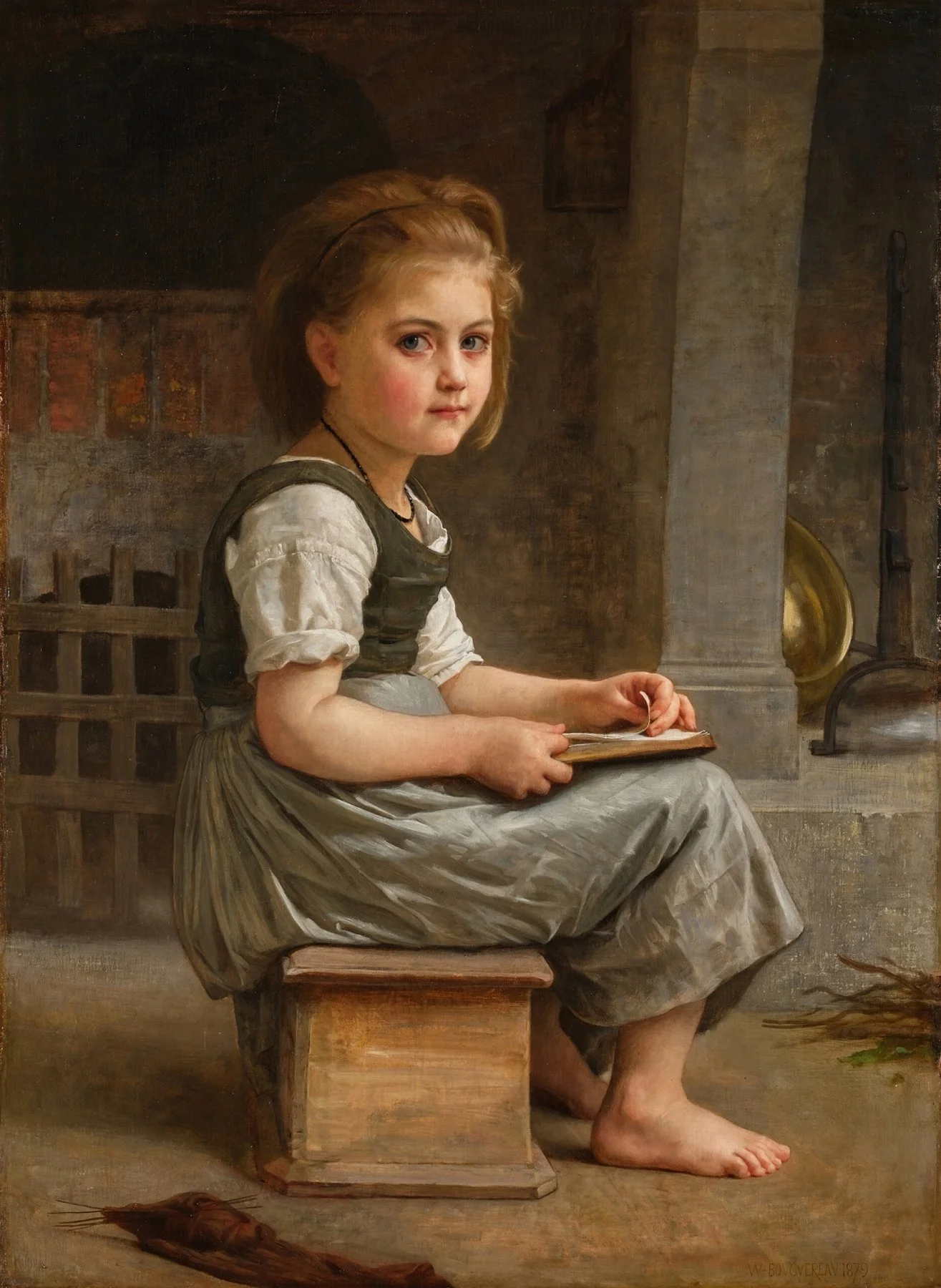
La petite écolière (The Little Schoolgirl) (1879), William Bouguereau
Rest and introspection are necessary to get better, but getting back in motion takes more than that. Just like with a physical injury, while rest is necessary after trauma, it is also a state where your muscles slowly atrophy, and too much of it does more harm than good.
There is a point where taking a break from art and expectations isn’t helping you recover anymore, and it’s time to get back to it.
Why You Need a Plan
Depending on how much your relationship with art had degraded, the thought of getting back to it might feel overwhelming or even bring anxiety. But you shouldn’t go back to the routines, practices and mindset that put you in this state. Planning allows you to choose new, better ones, and reduces the overwhelm by giving you a clear and manageable path to follow.
This is another reason why we started by dropping all previous expectations: for this plan not to inherit the unhealthy aspects of your previous practice, you need to start from scratch. When designing your plan, try to ignore your old trajectory and reconsider all your works in progress with fresh eyes. Because you have invested time and effort in something doesn’t mean it’s worth putting in more.
There are three things you plan should help you do.
Address what went wrong: when trying to understand what made you drift, hopefully you were able to identify specific things that were working against your long-term art practice. Those could be in your environment, in your own thoughts and patterns, or in your art practices… A good plan should address as many of those as possible. Eliminate what you can, adjust what needs to be, and set up healthy ways to manage or cope with what you can’t change. Addressing these problems should be your first step, but try to tackle them one at a time.
Find what you lost: inspiration, motivation and meaning can be found again. For inspiration, browse artworks, create mood boards; start from the last thing that you found inspiring, broaden your scope if needed, and open up to external influences and unexpected discoveries until you find something inspiring again. Then, follow that spark where it takes you. For motivation, surround yourself with people who have it, be mindful of your own self-talk, start journaling and reminding yourself of your purpose, read motivating stories or non-fiction books. If what you lost is your deeper meaning, reflect on what it used to be, if it changed or you lost touch with it, journal, talk to other artists about their meaning to see if any of it resonates, read philosophy.
Get back to it gradually: do not get back to the same amount of practice as you used to immediately, unless you feel like it. You are rebuilding healthy artistic habits, and habits are best established with consistency, not big changes. Your first goal should be to show up, even just for a few minutes, rather than trying to complete long hours. You need to establish first, and improve later. Don’t make this plan with your old expectations of how much you could or should create: start as slowly as you can, set yourself up for some wins, and build momentum from there.
Your plan doesn’t have to look like any one else’s, or take any specific shape. It can be a list, a calendar, a journal entry, a schematic, even a page of doodles. The important is that:
It makes sense to you,
It checks the three previous points,
It specifies what you will do, when and where,
It feels clear and manageable.
If your plan does not feel clear and manageable, find out where the issue is, and correct it as many times as needed until it does. Getting back to something you stopped takes some pushing, it is never as comfortable as staying where you are, but this discomfort should be manageable.
Get Back to It Gradually
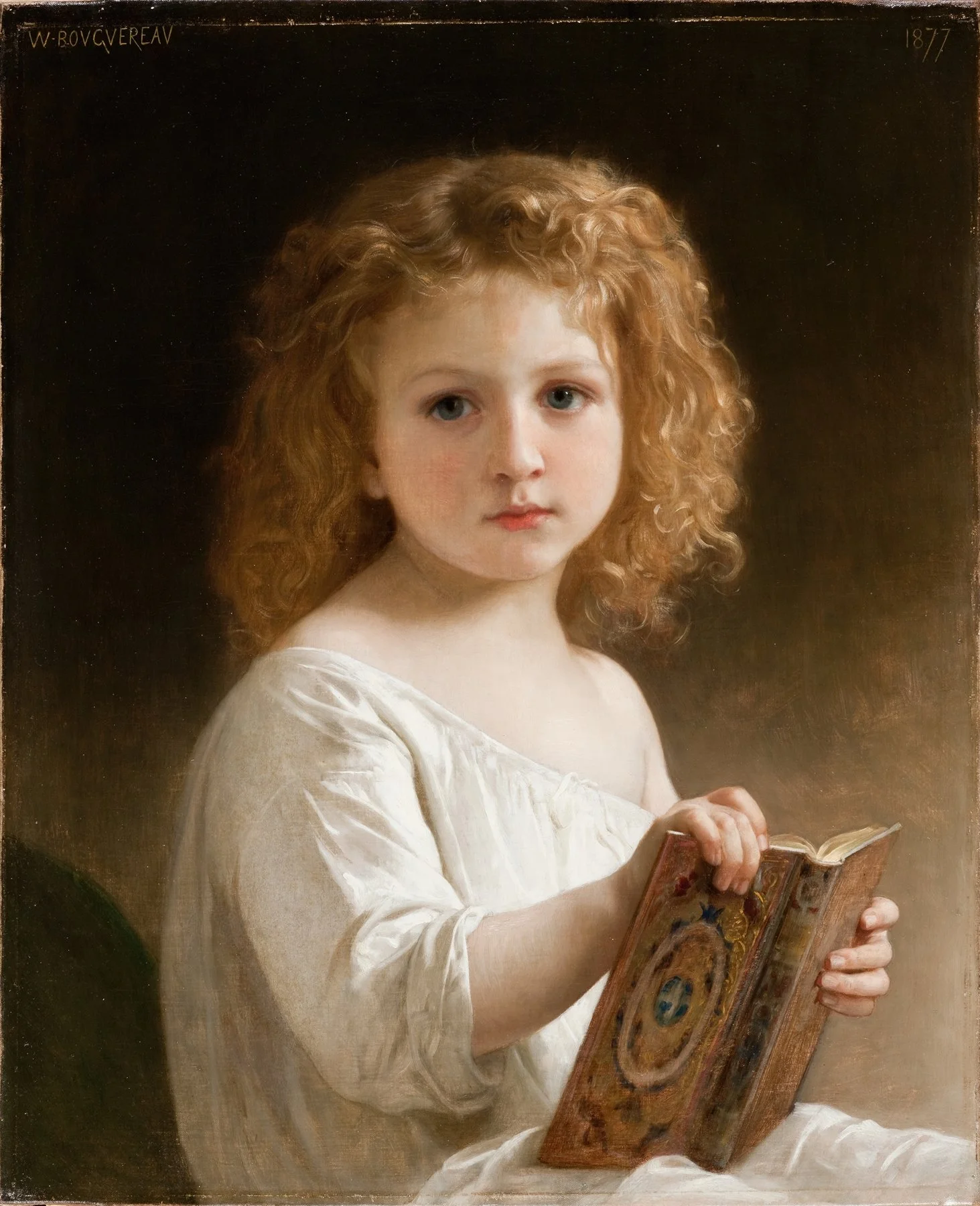
The Story Book (1877), William Bouguereau
Building your practice back up gradually can be trickier than it seems. If you are so unhappy with the current state of your practice, it makes sense that you would want it to be back to higher levels as soon as possible; and this is made even worse if you tend to have high expectations for yourself, which can be one of the things that damaged your relationship with art in the first place.
Changing everything in your routine at once can be tempting, but this typically won’t lead you where you want to go. Instead, it perpetuates a negative circle and builds the worse possible evidence: that every time you try to get back to art, you fail.
Trying to do more than you can manage erodes your confidence in your ability to follow through with your decisions, making your more likely to give up permanently. And as Catherine, one of my teachers and coaches put it « the only way to fail [at art] is to stop ».
Art is a lifelong pursuit. To build skills and create meaningful work takes years, and there is always more to discover and to refine. Because of this, we need to think long-term. Occasional challenges can push us forward as long as they’re planned mindfully, but this post is specifically about re establishing your art practice sustainably.
It is important to start small and increase the time and effort you invest into your art practice gradually:
To avoid overwhelm at the idea of getting back to it,
To re learn to enjoy your practice,
To give yourself some wins for motivation,
To regain confidence through the evidence that you can follow through with your intentions and succeed.
When starting any habit, it is important to focus on implementing it first, and improving later. That means making sure to show up consistently, no matter for how small of an action, because it is much easier to increase a practice that is already established than it is to establish a big one from nothing.
Everyone’s practice might look different, but I have a few helpful tips that should apply to different arts.
Always under plan: most people have a tendency to plan for more than they can achieve. Because planning is a way to project into the future, we project with optimism, and plan for the best version of ourselves and reality; but life never fails to derail us. It is important to plan less than you think you can do, leaving room for rest, transition between activities, and the unexpected. Everything you can do on top of what you planned will then be a bonus.
Stop when you’re inspired: always finish your creative session when things are going well. This is counter intuitive, as when we find inspiration we want to pursue it as far as it goes; but finishing a drawing session after you have exhausted this inspiration and are facing a problem is a terrible idea. It will make much harder for you to get back to it on the next session. Instead, stop when you know where you are going next, and are excited to do so: you’ll get back to your work with excitement.
Make your target so easy it would be silly to miss it: when deciding what your measure for success for your art practice will look like, make it as humble as you possibly can. In the beginning, building the evidence that you can show up is more important than achieving a certain amount. Make your habit so easy to perform that you simply can’t not do it: for example, opening your sketchbook and making one mark. The harder is to get started, so establish the smallest action that gets you started as a habit.
Reframe your vision of success: similarly to the previous point, make sure to adjust your idea of success. It is easy to unintentionally try to fool yourself: under planning, focusing on small habits, but still feeling bad for doing so, believing you should be doing more, and being critical of yourself. But this kind of negative self-talk isn’t helping. Keep track of your thoughts and inner dialogue, and when you find yourself critical and unconstructive, remember your current priority is re establishing a habit and that you’re doing this for the long run. Focusing on establishing a healthy foundation will take you further than big and unsustainable gestures.
How I Am Rebuilding My Practice
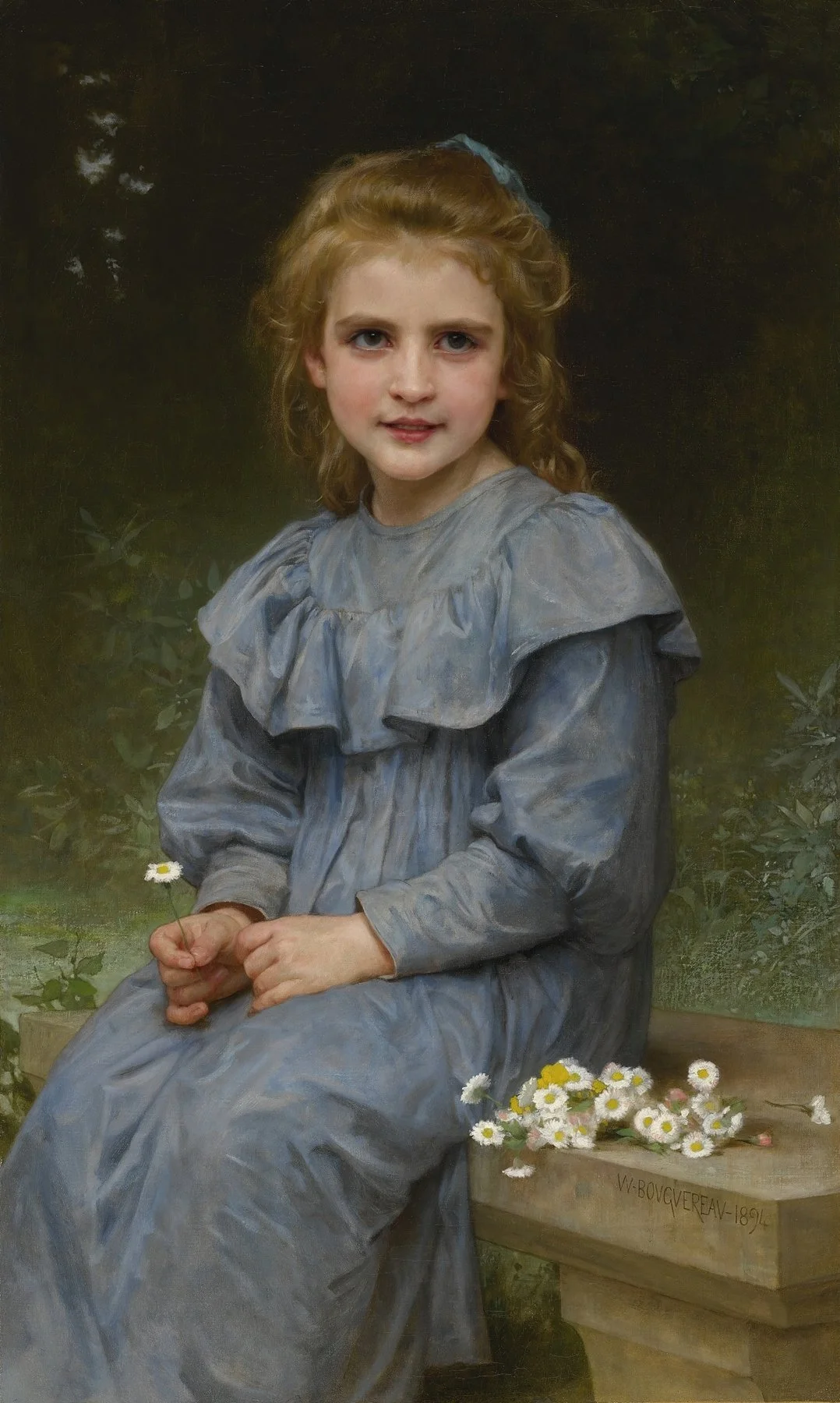
Pâquerettes (1894), William Bouguereau
For me, the past couple months have been difficult; while I started by taking a much needed break, I found myself feeling more and more guilty that I wasn’t studying or making any art. I did a lot of introspection, and you can read the results on this blog.
Researching and thinking about the creative process and how to help self-directed art students build a sustainable practice is an important part of my work, and it helped me get back on track quicker than I would have without it. I must apply my own advice.
Giving up my previous expectations for what my art studies and practice should be like, both in quantity and quality, has been essential. It took me weeks to fully reset, but after that I was finally ready to make a plan and slowly get back to it. I started with two lists:
The courses I want to follow, what I want to learn from them, and why it matters to me;
The personal projects I want to invest in, why they matter to me, and how I would work on them.
From these lists, I chose one course and one project to focus on first. I assessed how much time I really have available for art in the week (not as much as I used to), and made a simple plan for what I’ll work on, when, and how long I expect my current class to take.
I am also tracking the habit of practicing art, with the intention of showing up on most days. I don’t have a daily target or strict rule for this: anything from a simple swatch, a note in my art journal, or watching one minute of a lesson would register. This isn’t about how much progress I am making, but about being in motion as opposed to static.
With this, I also happen to have a couple of workshops I signed up for in the coming months, to explore some interests I have wanted to invest in for a long time.
If you are struggling, I hope that you found something that resonated with you, or just what you need to rebuild your art practice.
